
Many homeowners discover an unanticipated problem as summer turns into fall: their basements get noticeably more humid. Condensation, a musty smell, or even tiny mold growth might appear on the walls of your basement. Although spring flooding often gets the most attention, fall brings with it special moisture problems that can jeopardize the structural integrity and air quality of your house.
The first step to protecting your investment and keeping your home healthy is to understand why basement humidity rises in the fall. Although the answer isn’t always clear-cut, you can maintain a dry, mold-free basement all season long with the correct information and preventative actions.
The Science Behind Fall Basement Humidity
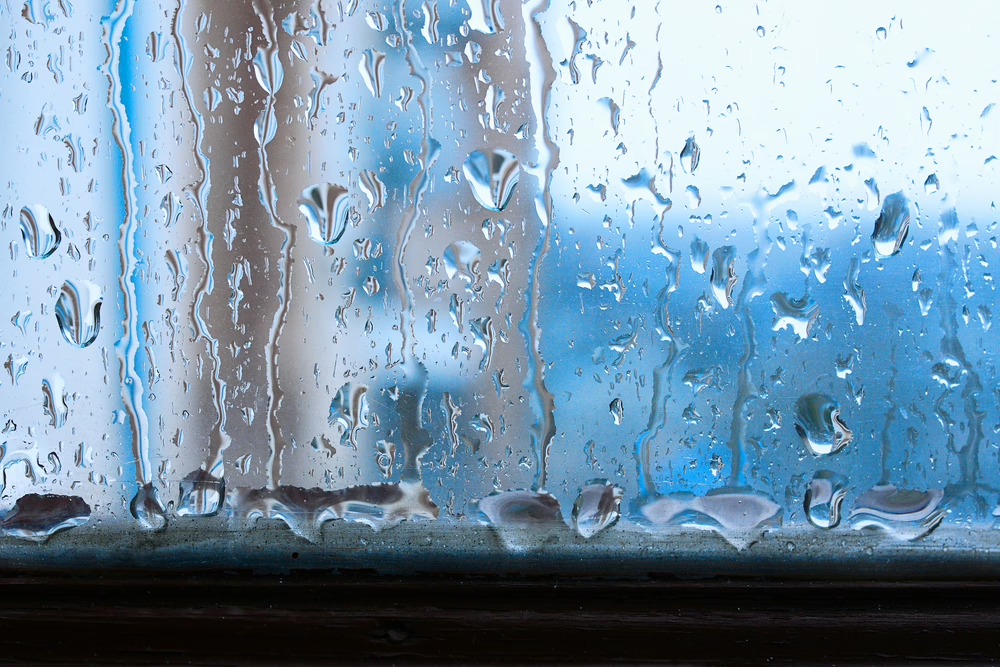
Temperature fluctuations create the perfect storm. The perfect environment for basement moisture buildup is created through fall weather patterns. Outside temperatures can fluctuate significantly between warm afternoons and cool evenings during this transitional season. Because it is underground, your basement remains reasonably cool all year long. Condensation almost instantly occurs when warm, humid outdoor air enters your basement and comes into contact with colder surfaces.
Basements often see humidity spikes in the fall because warm outdoor air cools rapidly underground. That sudden temperature change causes condensation on walls, pipes, and joists, which is one of the first conditions mold needs to grow.
The dew point effect is a phenomenon that becomes especially problematic in the fall. The American Society of Heating, Refrigerating and Air-Conditioning Engineers (ASHRAE) states that residential spaces should have a relative humidity of between 30% and 60%. The risk of mold growth and material deterioration rises sharply when basement humidity surpasses these thresholds, which often occurs in the fall.

Regional Climate Factors
Fall basement humidity conditions are especially challenging in the Mid-Atlantic region. Warm, humid air masses are frequently followed by sharp cooling in September and October. Multiple condensation events are produced as a result, exacerbating moisture issues. Maritime air masses that bring high moisture content inland present additional difficulties for coastal areas.
Fall basement humidity is also influenced by ground saturation from late summer rainfall. The soil around your foundation is still wet even after surface water has evaporated. Through a process known as capillary action, this moisture gradually moves through masonry and concrete, raising the humidity levels inside.
Health and Structural Risks of Elevated Basement Humidity
Mold can start growing on surfaces 24 to 48 hours after being exposed to water, and the Centers for Disease Control and Prevention (CDC) states that damp indoor environments are the main cause of mold growth. Lower levels of your home are not immune to mold. Mold spores, musty smells, and other pollutants are carried into living areas of your house by air rising through your basement due to a phenomenon known as the stack effect.

The following are typical health consequences linked to mold exposure:
- Skin rashes
- Chronic coughing and respiratory irritation
- More severe symptoms of asthma and allergic responses
- Irritation of the throat, nose, and eyes
- Fatigue and headaches
Controlling moisture is essential to controlling mold, according to the Environmental Protection Agency. If the underlying moisture problem is not addressed, no amount of cleaning or remediation will be able to permanently solve a mold problem. For homeowners dealing with persistent musty odors or suspected growth, scheduling a mold inspection in Collingswood, and the surrounding areas is a smart first step toward identifying hidden moisture problems.
Structural and Material Damage
Chronic basement humidity poses a threat to your home’s structural integrity and precious belongings in addition to health issues. Rot, warping, and a reduction in structural strength arise from the absorption of moisture from humid air by wood framing, joists, and subflooring. Materials with a moisture content greater than 20% promote microbial growth, according to the IICRC S520 Standard, an industry-accepted guideline.
| Material | Humidity Damage Risk | Timeline for Deterioration |
| Wood framing and joists | Rot, warping, loss of structural integrity | 3-6 months of elevated moisture |
| Drywall and insulation | Disintegration, mold growth | 2-4 weeks of sustained humidity |
| Stored items (boxes, furniture) | Mildew, deterioration, permanent staining | Days to weeks depending on materials |
| Metal fixtures and HVAC components | Corrosion, reduced lifespan, efficiency loss | Ongoing with each humidity cycle |
| Foundation concrete | Mineral buildup, chipping, flaking, structural compromise | Years of repeated moisture exposure |
Stored items are also damaged by humidity. Books, papers, textiles, and photographs all suffer from mildew and permanent stains. Tools and electronics corrode. Replacing damaged items frequently has a greater financial impact than putting in place appropriate moisture control measures.
Common Sources of Fall Basement Humidity
As temperatures drop, many homeowners unintentionally trap humid air in their basements by reducing ventilation. Windows in the basement are sealed and closed. HVAC systems change airflow patterns when they transition from cooling to heating mode. Because there is nowhere for this stagnant air to go, humidity builds up.
One of the most overlooked causes of elevated basement humidity is failing to replace HVAC filters. Restricted airflow can shift humidity balance and create stagnant air pockets that trap moisture. Regular filter maintenance keeps air moving properly throughout your home, including basement spaces.
Foundation and Drainage Issues
The soil surrounding your foundation gets saturated by fall rains. Water overflows close to your foundation rather than being diverted if gutters are clogged with fall foliage. Localized saturation zones are produced when downspouts dump water too close to your house. This water eventually seeps through foundation walls through porous concrete, cold joints, and cracks.
These issues are exacerbated by negative grading. Every rainfall pushes water toward the walls of your basement when the soil slopes in the direction of your foundation rather than away from it. The original grading may have been reversed by the settlement of even houses with working drainage systems decades ago.
Open Windows and Doors
Many homeowners are tempted to open their basement windows for “fresh air” because of the pleasant fall weather. This may make sense, but in reality, it brings warm, humid outdoor air into your cool basement. On cool surfaces, such as walls, pipes, windows, and stored objects, that temperature difference instantly causes condensation.
Inadequate or Damaged Vapor Barriers
Over time, vapor barriers put in place during construction deteriorate. Their efficacy is compromised by punctures caused by settling, pest activity, or renovations. Some older homes are completely devoid of adequate vapor barriers. In the absence of this barrier, soil moisture will constantly seep into your basement through foundation walls and concrete slabs.
Practical Solutions for Controlling Fall Basement Humidity
One of the best ways to control seasonal humidity is to install a high-quality basement dehumidifier. Whole-home or dedicated basement dehumidifiers, as opposed to portable units, do not require collection buckets to be emptied because they connect to your HVAC system or drain straight to plumbing.
Take into account the following features when choosing a dehumidifier:

- Size and Capacity: Determine the size of your basement and select a unit that is rated for that area. Units that can remove 50 to 70 pints of moisture per day are necessary for the majority of basements.
- Energy Efficiency: Seek out models with ENERGY STAR certification that regulate humidity levels without using a lot of electricity.
- Drainage Options: Compared to manual emptying, units with built-in pumps or gravity drainage are more dependable and convenient.
- Humidity Controls: Accurate humidity control is possible with digital humidistats. For best results, keep the humidity in your basement between 30% and 50%.
Throughout the humid fall months, keep your dehumidifier running. To provide hands-off protection, many contemporary units feature automatic sensors that turn on when the humidity level exceeds your desired level.
Improve Basement Ventilation
Timing is everything when using strategic ventilation to remove humid air and replace it with drier air. During low-humidity periods, which are usually early in the fall when outdoor dew points are lower, ventilate your basement. In hot, muggy afternoons and evenings, shut off windows and vents.
Compared to passive window ventilation, mechanical ventilation systems provide more controlled airflow. Humid air is directly removed by exhaust fans that are vented to the outside. As the heating season approaches, energy recovery ventilators (ERVs) and heat recovery ventilators (HRVs) minimize energy loss while facilitating the exchange of fresh air.
Installing fans to move air across basement surfaces will improve interior air circulation. By doing this, stagnant areas where humidity builds up are avoided. To let conditioned air from upper floors flow into basement areas, keep interior doors open.
Address Exterior Water Management
The best time to get your home’s exterior drainage systems ready for winter is in the fall. Clear the gutters of any debris that obstructs water flow, such as leaves and twigs. To reduce the need for future maintenance, install gutter guards. Make sure that every downspout points water away from your foundation by at least six feet.
Examine the grading all the way around the perimeter of your foundation. A minimum grade of 6 inches over 10 feet should be present in the soil as it slopes away from your house. Where necessary, add soil to create adequate drainage. If regrading isn’t enough to address water accumulation issues, think about installing French drains or swales.
For exposed foundation walls, use high-quality exterior foundation waterproofing. This forms a barrier that keeps water out. For recurring problems, think about excavating to install or fix waterproof membranes and external drainage systems.
Foundation Waterproofing and Vapor Barriers
When outside measures are impractical, protection can be obtained through interior waterproofing solutions. When applied to interior concrete walls, foundation sealers prevent moisture from escaping through porous concrete. Concrete and these penetrating sealers undergo a chemical reaction that creates crystalline barriers inside the substance.
Complete moisture protection is provided by expert vapor barrier installation. Thick polyethylene sheeting, usually 6 to 20 mil thick, is used to cover walls and floors in modern vapor barriers. A proper installation consists of:
- Full coverage with few seams
- Specialty tape or adhesives to seal seams.
- Walls that are mechanically fastened securely
- When necessary, integration with drainage systems
- Appropriate detailing around penetrations and obstacles
Interior drainage systems combined with vapor barriers offer strong protection for houses with serious moisture issues. Water is collected by perimeter drainage channels in these systems and sent to a sump pump for removal.
HVAC System Optimization
Plan for HVAC maintenance in the fall to maximize the humidity control capabilities of your system. During times of high humidity, change the filters once a month. To be certain there is correct operation, refrigerant levels, and drainage, have your system professionally inspected.
Upgrade to a smart or programmable thermostat with humidity control capabilities. Even when heating or cooling is not required, these sophisticated systems can turn on your HVAC fan to move air around and lower humidity.
Make thoughtful temperature adjustments if your basement has distinct climate zones. Even though it may seem counterintuitive, slightly warming a basement during humid fall periods raises surface temperatures, which lowers the possibility of condensation.
When to Call a Professional
Some circumstances call for expert knowledge; speak with moisture control experts if you encounter:
- Despite using a dehumidifier, the humidity remains above 60%
- Over ten square feet of visible mold growth
- Your basement may have standing water or seepage of water.
- structural issues such as large foundation cracks or bowed walls
- Annually recurring issues with humidity
- Musty smells that don’t go away with airflow
To find hidden moisture sources, professional moisture control contractors use specialized equipment. Anomalies in temperature that indicate water intrusion are detected by thermal imaging cameras and water content is measured by moisture meters. Additionally, pressure testing locates air leaks that are causing issues with humidity.
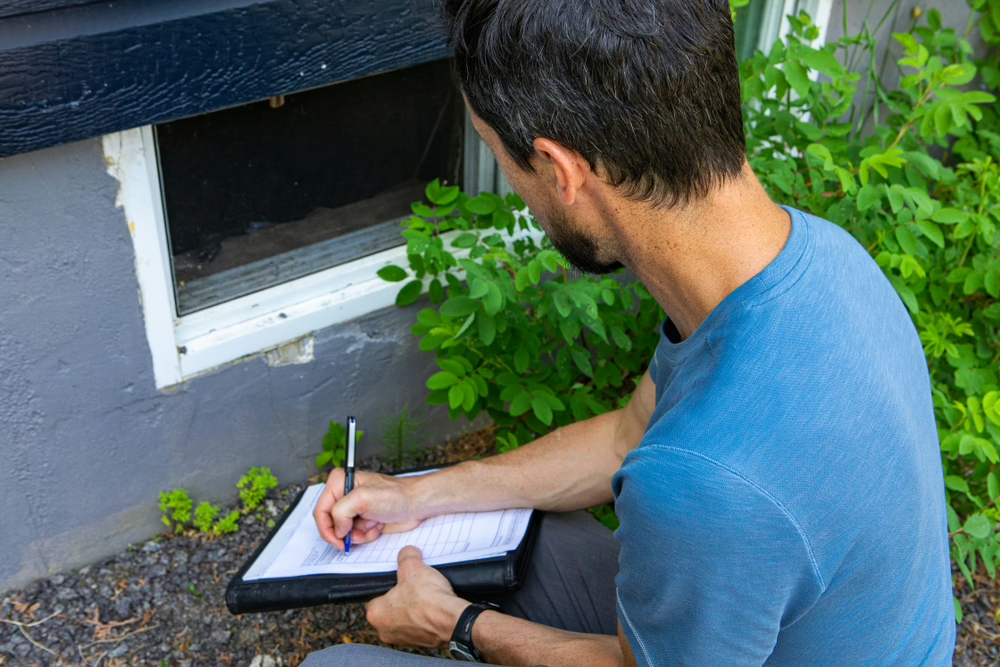
Guidelines for expert mold remediation when growth has been caused by humidity issues are provided by the IICRC S520 Standard. By appropriately handling contamination, adhering to these procedures safeguards your health as well as the value of your house. If moisture problems have already caused visible deterioration, especially where prolonged humidity has compromised framing, subflooring, or foundation integrity, professional water damage restoration in Haddon Heights can help stabilize affected materials and protect your basement from long-term structural issues.
Preventive Maintenance for Future Fall Seasons
Once you’ve addressed current humidity problems, establish a maintenance routine to prevent recurrence:
Spring Preparation:
- Examine drainage and foundation systems following winter freeze-thaw cycles
- Prior to the rainy season, test backup systems and sump pumps
- Gutter cleaning and repair following winter damage
Summer Monitoring:
- During humid times, proactively run dehumidifiers
- Use hygrometers to check the humidity in the basement
- Deal with any water intrusion right away
Fall Readiness:
- Before the leaf drop peaks, thoroughly clean the gutters
- Check for appropriate drainage and grading
- Prior to the heating season, test HVAC systems
- On-time HVAC filter replacement
- Check vapor barriers and sealants for damage
Winter Vigilance:
- Keep the basement temperature constant
- If the humidity increases, keep the dehumidifier running
- Keep an eye out for condensation on cold surfaces
- Avoid ice dams in gutters
With a hygrometer, record the humidity levels all year long. By using this data, you can spot trends and take preventative action before issues arise. For easy tracking, many contemporary hygrometers have data logging capabilities or smartphone connectivity.
Take Control of Your Basement Environment
Humidity in a basement in the fall is inevitable. You can put effective solutions in place if you understand the seasonal dynamics that lead to moisture problems. There are solutions for basement moisture for every circumstance and price range, ranging from straightforward fixes, like better ventilation and dehumidification, to extensive strategies incorporating vapor barriers and drainage systems.
The expense of appropriate moisture control is greatly outweighed by the health hazards, structural harm, and lost storage value associated with humid basements. You can safeguard the health of your family and the value of your home by taking immediate action before humidity issues worsen and lead to mold growth or structural damage.
Don’t wait for the issue to get worse if your basement is consistently humid this fall. A professional evaluation can pinpoint the precise causes of your moisture problems and suggest focused fixes. No matter the season, your basement should be a dry and functional area. It can be if moisture control is properly addressed.
To assess your basement and create a personalized plan for long-lasting humidity protection, get in touch with a certified moisture control specialist. All it takes is one consultation with Safer Home Services LLC to have a healthier, drier basement. Call (856) 271-5313 today to schedule your consultation with Safer Home Services LLC and take the first step toward a healthier, drier basement.
Jack Lyons
Co-owner of Safer Home Services LLC